If you are thinking about buying a rental property in Greeley, you are probably asking the right question first: will the numbers and demand actually support the investment? That is a smart place to start. Greeley offers a growing population, a meaningful renter base, and several steady demand drivers, but it also comes with pricing pressure, softer apartment conditions, and local operating costs you need to underwrite carefully. In this guide, you will get a practical look at what makes Greeley worth a closer look for rental income, what to watch out for, and how to evaluate opportunities with more confidence. Let’s dive in.
Why Greeley draws rental investors
Greeley has growth on its side. The city reached 115,073 residents in July 2025, which was up 5.8% from its 2020 base. In the broader metro, HUD identified the Greeley area as the fastest-growing metro in Colorado and estimated the population at 366,200 as of January 1, 2024.
That growth matters because rental demand often follows jobs, education, and household formation. In Greeley, the renter base is not tied to just one source. The data points to demand from workers, students, and households connected to local services and institutions.
The city also has a meaningful renter share. In the 2020-2024 ACS, the owner-occupied housing rate was 60.9%, which implies about 39% renter occupancy. Median gross rent was $1,388, and median household income was $69,881, which suggests a market with solid rental participation and moderate pricing rather than a luxury-heavy rent profile.
Greeley demand drivers to know
Major employers support housing demand
A healthy rental market usually starts with local employment, and Greeley has several notable anchors. HUD identified JBS as the area’s largest employer with 6,000 employees and Banner North Colorado Medical Center as the second largest with about 3,550 workers.
Those kinds of employers help support year-round housing need across different price points and property types. For an investor, that can mean a broader renter pool instead of relying on one narrow segment of the market.
UNC adds a student rental channel
The University of Northern Colorado is another important piece of the picture. UNC says it enrolls about 9,800 students in Greeley. The university also requires many newly enrolled students age 20 or younger who take 6 or more credits to live on campus for two full semesters unless they qualify for an exemption.
That does not remove off-campus demand. It simply means your likely renter profile near the university may include upperclassmen, graduate students, transfers, and others who are not part of the initial on-campus requirement. If you are considering a property near UNC, it helps to treat student demand as a useful channel, not a guaranteed lease-up strategy.
Local events add economic activity
HUD also notes that the Greeley Stampede draws about 250,000 people annually. While an event is not the same thing as permanent housing demand, it does reflect local activity and economic visibility. In a growing market, those community anchors can help reinforce overall appeal and job-related movement.
What rents look like in Greeley
If you are underwriting a deal, rent assumptions need to stay realistic. Current citywide benchmarks cluster in the low-to-mid $1,300s, depending on the dataset and unit type.
Apartment List’s May 2026 report put Greeley’s median rent at $1,328, down 6.2% year over year. Its unit-level estimates were about:
- $1,342+ for a one-bedroom
- $1,508+ for a two-bedroom
- $1,917+ for a 3+ bedroom
The Census ACS reported median gross rent at $1,388. Since these sources use different definitions, the best way to use them is as a range, not a single exact rent target.
What purchase prices mean for cash flow
This is where many investors need to slow down and get very disciplined. Zillow’s Greeley data showed a typical home value of $489,065 as of January 31, 2026, with a median sale price of $487,333. Median time to pending was 61 days.
Put simply, purchase prices can be high relative to local rents. That does not mean a rental purchase cannot work. It means basis control, financing terms, renovation scope, and operating assumptions matter a lot.
If you overpay or build an aggressive rent projection into your analysis, your margin can disappear quickly. In a market like Greeley, the deals that make the most sense are often the ones where the property is efficiently operated and bought at a workable basis.
Property types that may fit better
Greeley offers more than one rental strategy. HUD discusses single-family homes, townhomes, condominiums, and multifamily apartments in the metro. For many buyers, the most practical categories to compare are single-family rentals, small multifamily or converted properties, and larger apartment communities.
Single-family rentals
Single-family homes can appeal to renters who want more space or a different layout than a traditional apartment. They can also give you flexibility if you later decide to resell to an owner-occupant.
That said, single-family rentals come with their own management issues. Greeley’s housing guide highlights practical items such as weeds, trash, inoperable cars, parking, snow removal, landscaping, and outdoor signs. Those are not small details when you are budgeting time, lease terms, and maintenance expectations.
Small multifamily properties
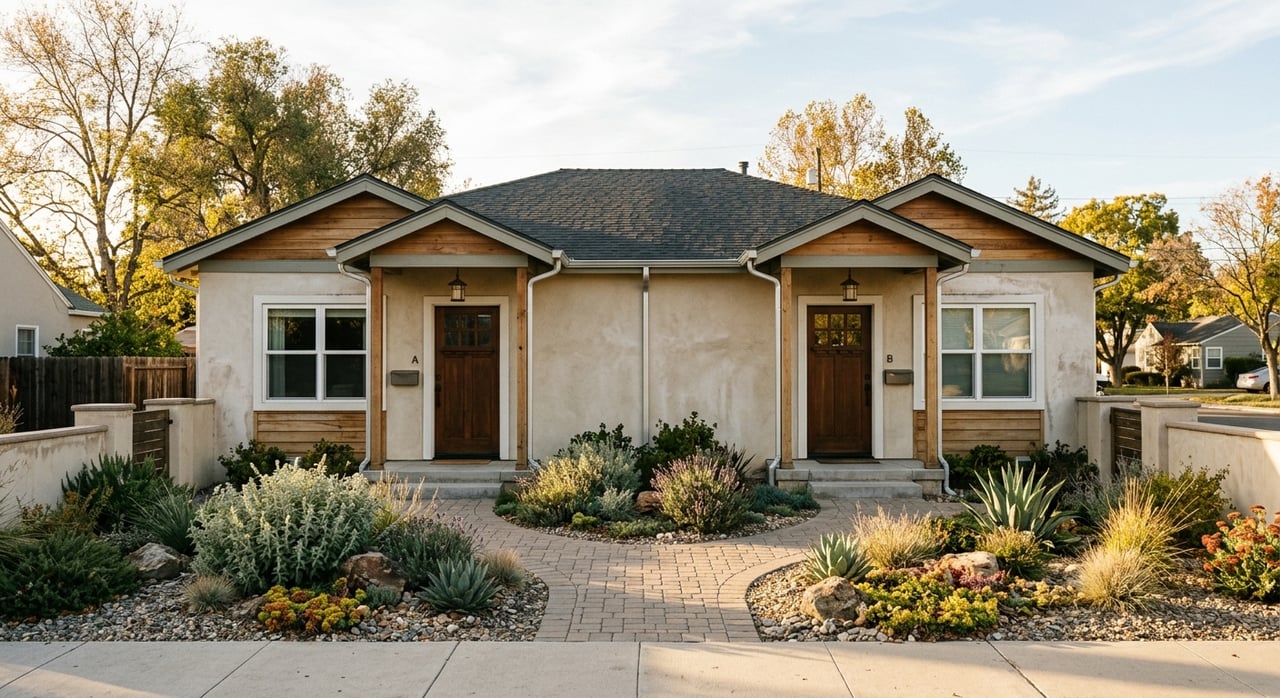
For many investors, small multifamily can offer a middle ground between a single rental home and a larger apartment asset. The research suggests that smaller, efficiently run housing may be a better fit than a highly leveraged luxury purchase.
This type of property can sometimes spread vacancy risk across multiple units while staying more manageable than a large complex. It may also be less exposed to the lease-up pressure newer apartment product can face in a softer market.
Larger apartment communities
If you are considering larger multifamily, caution matters right now. HUD says apartment market conditions are soft because apartment supply growth exceeded demand for two years. It also noted major recent deliveries, including a 480-unit community that opened in April 2023 and a 336-unit project under construction near downtown.
That kind of supply can create more competition, slower lease-up, and concessions. Combined with Apartment List’s year-over-year rent decline, the local data supports a conservative approach for newer apartment product.
Key costs investors should not overlook
A property can look good on paper until you account for taxes, utilities, and compliance. In Greeley, these line items deserve close attention.
Property taxes
Colorado property-tax math is a major part of every rental pro forma. The Colorado Division of Property Taxation says that for 2026, the local-government residential assessment rate is 6.8% and the school-district residential assessment rate is 7.05%. Actual tax still depends on the mill levies in the specific tax area.
DOLA explains that property tax is calculated from actual value, assessment rate, and mill levy. That means you should not rely on rough estimates alone.
A Weld County property-report example for a Greeley residential property at 1109 18th St showed estimated 2025 taxes of $2,945.24 on an actual value of $518,826. That is only one property, but it shows how several tax authorities can stack together, including the City of Greeley, Weld County, School District 6-Greeley, and others.
Utilities
Utilities can also affect your monthly performance more than many buyers expect. The City of Greeley said its 2025 water, wastewater, and stormwater changes would increase the average monthly utility bill by $15.02.
The city’s rental housing guide also advises landlords and tenants to be clear in the lease about utility and trash responsibility. If you are comparing properties, be sure your lease strategy matches the property setup and utility burden.
Permits and rehab work
If your plan includes updates, conversions, or repairs, do not assume the work is permit-free. City of Greeley Building Inspection says an owner or agent who intends to construct, enlarge, alter, repair, move, demolish, or change occupancy must obtain the required permit before work begins. That includes regulated electrical, gas, mechanical, and plumbing work.
For investors, this is especially important when evaluating older homes, conversions, or value-add projects. Permit timing and scope can affect both budget and timeline.
Best areas of focus when evaluating deals
A smart Greeley rental strategy usually starts with matching the property type to the most likely renter profile. Properties near UNC and downtown may offer a clearer demand story for student-oriented or young-professional rentals. That does not guarantee performance, but it gives you a more defined leasing angle.
More broadly, today’s data suggests that modest, workforce-oriented housing may pencil better than a premium purchase with thin margins. Rent benchmarks support practical, moderate-price rentals, while current home values make it harder for expensive acquisitions to cash flow comfortably.
How to underwrite conservatively in Greeley
When a market has growth and demand but also softer apartment conditions, conservative underwriting becomes your edge. A few practical rules can help:
- Use rent comps as a range, not a best-case number
- Assume vacancy may be higher in newer competitive product
- Budget for concessions or slower lease-up where supply is heavy
- Verify the exact tax district before closing
- Review utility responsibility and monthly cost exposure carefully
- Confirm permit requirements before pricing a rehab plan
- Watch basis closely so the purchase price does not outrun the income
These steps may sound simple, but they often make the difference between a stable rental and a frustrating one.
Where local guidance adds value
In a market like Greeley, the most helpful support is often operational. You may need neighborhood-level rent comparisons, help identifying inventory that fits your goals, and clear eyes on inspection items, permit questions, and rehab scope.
That is where a hands-on brokerage can make the process smoother. With investor and rehab management experience, House2Home Real Estate can help you compare opportunities, coordinate the next steps after acquisition, and think through the path to lease-up or resale with a practical, numbers-aware approach.
If you are exploring rental property opportunities in Greeley and want local support that blends investor know-how with personal service, connect with Kimberly Tutor to talk through your goals.
FAQs
What makes Greeley attractive for rental property investing?
- Greeley has population growth, about 39% renter occupancy based on ACS housing data, major employers, and a university presence, all of which support ongoing rental demand.
What are typical rents for rental properties in Greeley?
- Current benchmarks place overall Greeley rents in the low-to-mid $1,300s, with Apartment List estimating about $1,342+ for one-bedrooms and $1,508+ for two-bedrooms, while ACS reported median gross rent at $1,388.
Are home prices in Greeley high compared with rents?
- Yes, they can be, which is why basis control matters. Zillow reported a typical home value of $489,065 and a median sale price of $487,333 as of January 2026.
Are apartment properties in Greeley facing more competition right now?
- Yes. HUD reported soft apartment market conditions because supply growth exceeded demand for two years, which can lead to slower lease-up and concessions in newer product.
What local costs should you check before buying a Greeley rental?
- You should closely review property taxes, utility costs, lease responsibility for utilities and trash, and any permit requirements tied to repairs, alterations, or conversions.
Are properties near UNC good for rental income in Greeley?
- They can be a useful demand channel, especially for upperclassmen, graduate students, transfers, and other renters who are not required to live on campus, but student demand should not be treated as a guarantee.