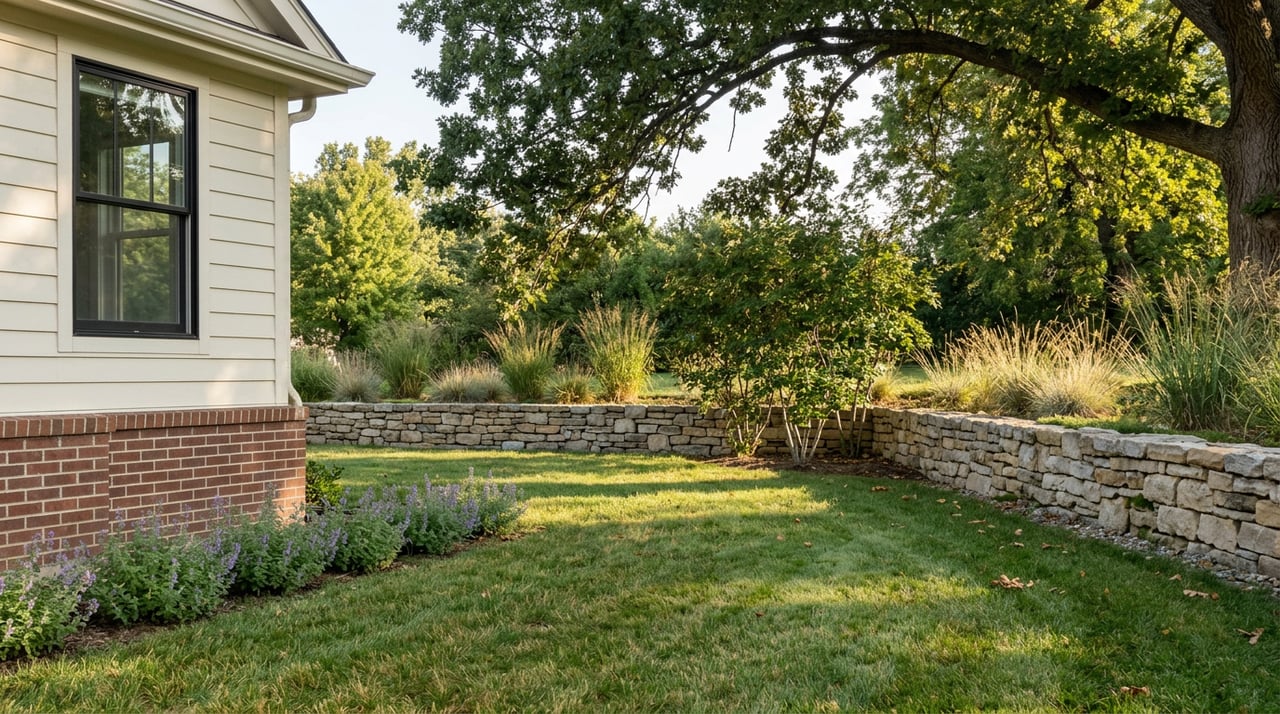
Picture a buyer walking the back fence line of a ranch home in one of Arvada's older subdivisions. There's a grassy channel running along the property edge, maybe with a line of cottonwoods shading it. It looks like drainage. It looks decorative. In a lot of cases, it's neither. It's a working irrigation ditch that has been carrying water every irrigation season since the 1860s, long before the houses around it were built. As the City of Arvada puts it plainly on its own ditches page, urban and suburban development grew up around these channels, not the other way around.
That order of events matters more than it sounds like it should, because it means the ditch usually has more legal standing on the property than the house does. And that creates a gap most buyers, and more than a few sellers, don't know exists until it surfaces during a transaction.
Arvada Sits on Top of Sixty-Some Ditches You've Probably Never Noticed
Arvada has more than 60 irrigation ditches running through nearly every part of the city. The three largest, named directly by the city, are the Farmers' High Line Canal, Croke Canal, and Church Ditch. All three date to the 1860s, and all three deliver Clear Creek water seasonally to Standley Lake in Westminster, with the Farmers' High Line and Church Ditch continuing on past the lake. Most of Arvada's ditches carry water from April through October. A few run year-round to keep reservoirs filled.
This is not decorative infrastructure. It's a functioning water delivery system, older than most of the neighborhoods it runs through, still doing the job it was dug to do a century and a half ago.
The Easement Nobody Recorded
Here's the part that catches people off guard during a sale. Arvada's own guidance notes that a ditch company rarely owns the land its ditch sits on. Instead, it typically holds a prescriptive easement, a right to cross and maintain that stretch of land without needing the owner's permission. The city is direct about the consequence: some of these easements are recorded, but a majority are prescriptive and simply aren't shown on development plats.
A Colorado water law firm explains why this happens. Once a ditch has been dug and used without objection from the landowner, consent is presumed, no deed, no signed agreement, no recorded document required. The same firm notes this can lead to confusion, because a ditch easement may never show up in the property records at all, which means a buyer or a title company has to physically inspect the property to even discover one exists. Another Colorado firm puts it even more plainly: most ditch easements in the state exist as implied easements, not documented by any single recorded instrument.
There's a practical sizing issue too. Ditch easements aren't limited to the wet channel itself. In flat terrain, which describes most of Arvada, a ditch company typically needs at least 20 feet of land on both sides of the ditch bank for access and maintenance. That's land a homeowner may be fencing, planting, or building near without realizing it falls inside a working easement.
A standard preliminary title commitment is built from what's recorded at the county clerk's office. If the easement was never recorded, it may not appear there. The Arvada Ditch Map and the ditch layer on Google Maps are two of the few tools that show these channels regardless of what's in the title chain, and asking directly is often the only way to confirm whether a specific parcel is affected.
Owning the Ditch Isn't Owning the Water
This is the part that surprises even people who've already accepted there's a ditch on the property. Living next to a ditch, or having one cross your backyard, does not give you any right to the water in it. Arvada states this in its own resident FAQ without much softening: using ditch water without owning shares in that ditch company is considered water theft.
Colorado State University Extension frames the broader principle this way:
The bottom line: buyers should never assume that water comes with a property.
Colorado recognizes three separate categories of water rights that can attach to a residential property: groundwater rights tied to a well, shares of stock in a mutual ditch or reservoir company, and decreed rights confirmed through the state water court. Each is a distinct legal instrument. None of them travel automatically with the land just because a deed changes hands.
That distinction plays out at closing in a very literal way. A well conveys through a Change in Owner filing submitted to the state engineer's office, separate from the deed. Ditch company shares, often called ditch rights or water stock, convey through a stock assignment, and the ditch company then issues a new stock certificate and updates its own shareholder registry. Neither of these happens automatically when the property deed records. Someone has to know the right exists, identify which instrument applies, and file the correct paperwork for it.
Here's a simple way to see how differently these pieces move:
| What's involved | What it actually is | How it transfers |
|---|---|---|
| The ditch itself | A prescriptive or implied easement, usually not recorded | Runs with the land regardless of the deed language |
| A domestic well | A groundwater right tied to a state permit | Change in Owner filing with the state engineer |
| Ditch company shares | Stock in a mutual irrigation company | Stock assignment, new certificate issued by the company |
| Decreed water rights | A right confirmed by state water court | Described in the deed or conveyed by a separate water rights deed |
Four different things, four different transfer mechanisms, and only one of them (the easement) shows up automatically regardless of what anyone signs.
What This Means for the Contract You Sign
The Colorado Real Estate Commission's approved Contract to Buy and Sell includes a dedicated section for describing which water rights, if any, are included in the sale: decreed rights, mutual ditch or reservoir company shares, or well rights. One Colorado real estate law firm is blunt about the stakes for sellers here, noting that a buyer's broker should recommend the buyer hire an attorney to review any water rights and draft the conveyance documents, precisely because getting this wrong after closing invites claims of misrepresentation or failure to disclose.
In practice, that section of the contract can't just be left blank or assumed to follow the house. If a seller or a prior owner ever purchased shares in the Farmers' High Line, Croke Canal, or Church Ditch company, that has to be named specifically, with the share count and company identified, not folded into a general description of "improvements."
The Asymmetry: Maintenance Duty Without a Water Benefit
There's one more wrinkle that tends to surprise homeowners after they've already closed. If you own land adjacent to a ditch, the vegetation along it, including trees, is your responsibility to maintain. The ditch company will prioritize removing anything that impedes water flow, but the routine upkeep of that strip falls to the adjacent owner, not the company delivering the water through it.
In other words, it's possible to inherit a real maintenance obligation on someone else's infrastructure without inheriting any right to the water running through it. That asymmetry is exactly why this deserves a conversation before it becomes a surprise.
Before You List or Waive an Inspection Objection
A few concrete steps, whether you're preparing to sell or you're a few weeks from closing on a purchase:
- Check the Arvada Ditch Map or the ditch layer in Google Maps to see whether a mapped ditch touches or crosses the parcel, since a standard title commitment may not show it.
- Ask directly whether the property, or any previous owner, ever held shares in the Farmers' High Line Canal, Croke Canal, or Church Ditch company.
- If shares exist, make sure they're named specifically in the water rights section of the purchase contract, not assumed to transfer with the house.
- If there's a well on the property, confirm the Change in Owner filing is planned as part of closing, since it doesn't happen automatically.
- Build in extra time. Deed history research at the county clerk's office and outreach to a ditch company can take longer than a standard title review, so don't schedule these confirmations for the week before closing.
A Few Common Questions
Does every home near a ditch have a legal complication? No. Most properties near one of Arvada's ditches sell without incident. This becomes material specifically when an easement actually crosses the parcel, or when water shares are part of what's being sold and need to be handled correctly.
Can I remove trees or brush near a ditch on my own property? That vegetation is generally the adjacent landowner's responsibility to maintain, but ditch companies prioritize clearing anything that blocks water flow. Check with the ditch company before doing significant work near the bank.
If there's no ditch on my lot, do I need to think about any of this? Only if you or a previous owner hold ditch company shares. Owning shares and having a ditch physically on your property are two different things. You can hold one without the other.
Arvada's ditches aren't a defect. They're part of what has made this ground worth farming and then worth building on for more than 150 years. The point isn't to be wary of them. It's to make sure the paperwork actually says what the property does.
If you're preparing to list a home near one of Arvada's ditches, or you're under contract on one and want a second set of eyes on the water rights section before you sign, House2Home Real Estate has spent years working through exactly this kind of local detail. Let's make your house a home, call or email our Arvada team today.